Filtered 365Nm Uv Flashlight Explained: A UK Buyer's Guide
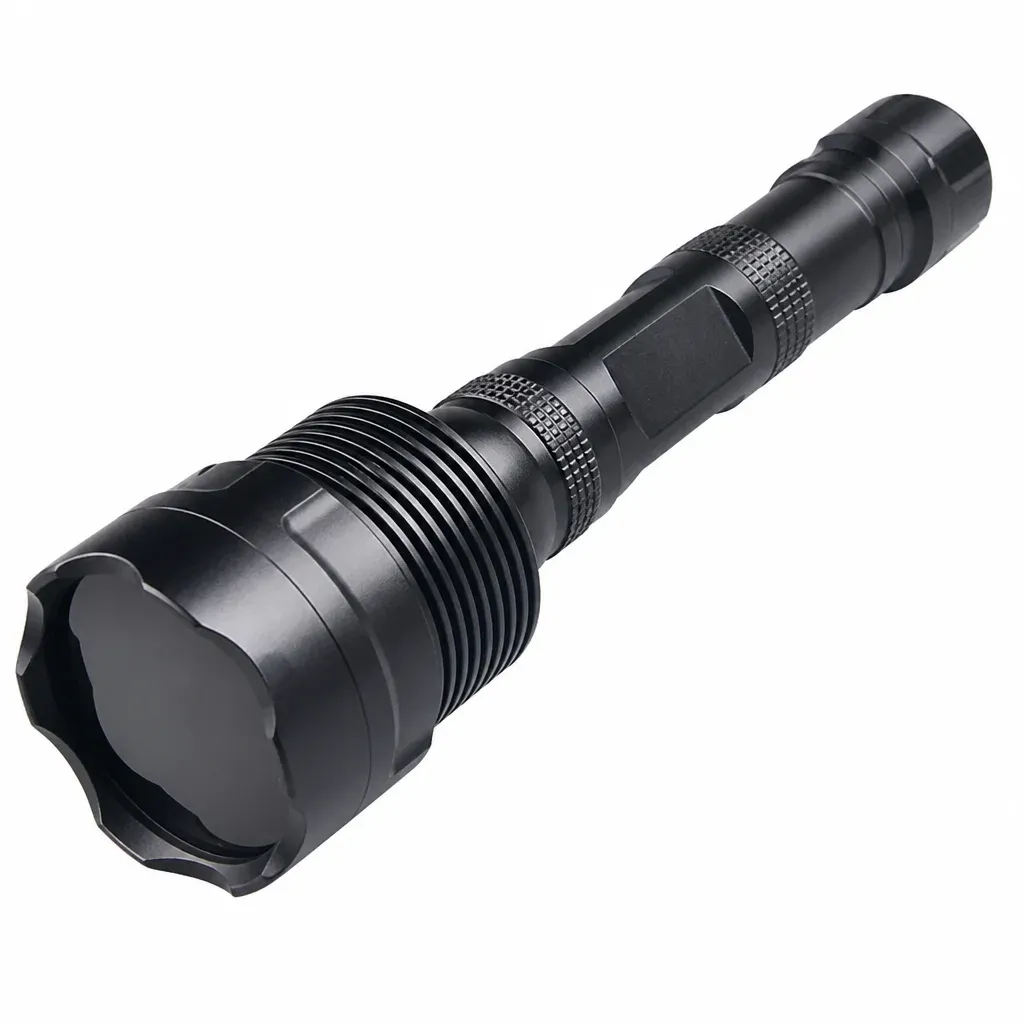
A filtered 365nm UV flashlight is not simply a brighter black light. For inspection work in the UK, it is the difference between seeing a genuine fluorescent response and being distracted by purple visible spill. Whether the job is leak tracing, forensic screening, hotel hygiene checks, pest control inspections or authentication work, the wavelength and the filter matter.
At UVBea Black, the focus is straightforward: a 365nm Black Light Torch for Accurate Professional Inspection. That matters because filtered 365nm UV with long-range beam power produces clearer fluorescence, better contrast and more reliable results in real working conditions. This guide explains what a filtered 365nm uv flashlight actually is, why professionals choose it, and what UK buyers should look for before ordering.
Key Takeaways
Filtered 365nm UV is designed to reduce visible purple spill so fluorescent targets stand out more clearly.
A filtered 365nm uv flashlight is typically better suited to professional inspection than unfiltered or lower-spec black lights.
For UK buyers, beam quality, filter effectiveness, build quality, battery performance and safe operating practice matter more than headline brightness alone.
Filtered 365nm torches are widely used for leak detection, contamination spotting, document checks, pest control work and specialist inspection tasks.
Buying from a UK-focused supplier can simplify delivery, support and product suitability for British trade and commercial use.
What Is a Filtered 365nm UV Flashlight?
A filtered 365nm UV flashlight is a handheld torch built to emit ultraviolet light centred around 365 nanometres, with a filter placed over the LED to block much of the visible light that would otherwise escape with the UV output. The result is a darker beam appearance and a cleaner fluorescent response on the surface being inspected.
That distinction is important. Many low-cost black lights appear bright because they leak a large amount of visible violet light. To the eye, they can look powerful, but for inspection they often create glare and reduce contrast. A properly filtered 365nm torch is intended to do the opposite: minimise distraction and improve detection.
In practical terms, when fluorescent materials react under a filtered 365nm beam, they tend to stand out more crisply against the background. This is particularly useful when the target is faint, the surface is uneven, or the user needs to inspect from a greater distance.
Why 365nm Matters for Professional Inspection
365nm is a recognised working wavelength for fluorescence
Ultraviolet light sits outside the visible spectrum. Within the UVA range, 365nm has become a widely used wavelength for inspection because many fluorescent substances respond well to it. This includes certain dyes, biological traces, minerals, security features and leak detection compounds.
The UK Health Security Agency notes that UVA covers wavelengths from 315nm to 400nm, placing 365nm firmly within the long-wave UV range commonly used in non-destructive inspection applications. Source: UK Health Security Agency guidance on ultraviolet radiation.
For buyers, that means 365nm is not a random specification. It is the wavelength many professionals actively seek because it is practical, established and suitable for a broad range of fluorescence-based tasks.
Filtered output improves what you can actually see
The phrase “filtered 365nm” matters as much as “365nm” itself. An unfiltered torch may still emit 365nm UV, but visible spill can wash out weak fluorescence. A filtered model suppresses much of that unwanted visible light, making the fluorescent reaction easier to spot.
This is especially valuable in environments where conditions are less than ideal: inspection under ambient light, larger indoor spaces, high shelves, service voids, plant rooms, warehouses and external work after dusk. A cleaner beam helps the operator distinguish meaningful fluorescence from background noise.
How a Filtered 365nm UV Flashlight Differs from Standard Black Lights
Visible spill versus inspection clarity
Standard black lights often look more purple to the naked eye. That can create the impression of strong performance, but inspection is about usable fluorescence, not visual spectacle. A filtered 365nm uv flashlight is built for clarity rather than theatrics.
When visible spill is reduced, the beam no longer dominates the scene. Instead, the fluorescent target becomes the focal point. That gives the user a more precise view of stains, residues, treated areas, leaks or markings.
Beam reach and control
For trade and site use, beam reach matters. A torch intended for close-up novelty use may be adequate at a few inches, but inspection professionals often need to scan floors, walls, ceilings, equipment housings and larger spaces efficiently. Long-range beam power allows a filtered 365nm torch to perform beyond bench-top distance.
This aligns with UVBea Black’s core proposition: filtered 365nm UV with long-range beam power for clearer fluorescence and less visible spill. For many buyers, that combination is the real upgrade.
Component quality and consistency
Not every product sold as a UV torch delivers the same wavelength accuracy, filter performance or build quality. Better units are designed around a purpose-built LED, a proper optical filter and a housing that supports consistent output. That matters for repeatable inspection work, particularly in commercial settings where the user needs confidence from one shift to the next.
Who Uses a Filtered 365nm UV Flashlight in the UK?
Facilities and maintenance teams
Building maintenance teams use fluorescent dyes to trace leaks in HVAC systems, pipework and fluid circuits. A filtered 365nm torch can make those traces easier to identify quickly, reducing time spent on guesswork.
Cleaning, hygiene and accommodation operators
Hotels, serviced accommodation providers and specialist cleaning teams may use UV inspection tools to identify residues that are not obvious under standard lighting. In hygiene-sensitive environments, inspection supports quality control and training.
In the wider UK context, cleanliness standards are not a cosmetic issue. The NHS emphasises infection prevention and cleanliness as core parts of safe care environments, which reinforces the importance of robust inspection processes where relevant. A UV torch is not a substitute for formal infection control procedures, but it can be a useful visual inspection aid in appropriate operational settings.
Pest control professionals
Certain pest-related traces fluoresce under UV light, helping technicians identify activity patterns or treatment areas. For pest control work carried out in lofts, basements, voids and external commercial sites, a filtered beam can offer better contrast in challenging locations.
Automotive and workshop users
Workshops may use UV-reactive dyes for coolant or air-conditioning leak detection. A long-range filtered beam can assist when tracing the source across engine bays, undertrays and workshop floors.
Security and verification tasks
Some security markings, inks and anti-counterfeit features respond under 365nm UV. That makes filtered torches useful for authentication checks, event operations and asset marking inspections.
What to Look for When Buying a Filtered 365nm UV Flashlight in the UK
1. Genuine 365nm output
Check that the torch is specifically sold as 365nm, not vaguely described as UV or black light. Precision matters because different wavelengths can produce different inspection results. If the listing avoids the exact wavelength, treat that as a warning sign.
2. A proper filter, not just a purple lens
A true filtered torch is intended to reduce visible light spill. Some low-grade products use tinted covers that change the look of the beam without delivering the same improvement in inspection clarity. Buyers should look for clear technical language about filtration and beam quality, not just cosmetic claims.
3. Long-range usable beam power
Brightness on paper is less useful than real-world reach. The question is whether the beam can reveal fluorescence from a practical working distance. If the application involves commercial premises, plant areas, vehicle checks or elevated surfaces, range matters.
4. Build quality for working environments
A professional torch should feel suitable for repeated use, transport and site handling. Aluminium construction, secure battery fit, dependable switches and solid heat management all contribute to longevity. Cheap consumer units often fail at the switch, cap or charging point first.
5. Battery practicality
Runtime and charging convenience affect daily use. For UK trade users, reliable rechargeable formats are often more practical than disposable battery systems. A torch that can hold consistent output during a full inspection round is easier to depend on than one that rapidly fades.
6. UK-based support and delivery confidence
For ecommerce buyers in Britain, local support still matters. Straightforward delivery, clear product information and access to after-sales guidance can make a noticeable difference, particularly when the torch is being bought for work rather than casual use.
Common Buying Mistakes with a Filtered 365nm UV Flashlight
Choosing by price alone
The cheapest torch is often the most expensive once inspection time, missed findings and replacement purchases are considered. If the beam is weak or the visible spill is excessive, the product has failed its main purpose.
Confusing brightness with effectiveness
A visually bright purple beam can be misleading. The real test is whether fluorescent evidence appears clearly and consistently. For inspection, cleaner output often beats flashier output.
Ignoring working distance
Buyers sometimes choose a torch that performs only at very close range, then discover it is slow and inconvenient in actual use. If the task involves scanning rooms, equipment or larger surfaces, beam reach should be part of the decision from the start.
Overlooking safety and handling
Even within the UVA range, UV tools should be used sensibly. Users should avoid direct eye exposure, use appropriate eyewear where the task requires it, and follow any supplied instructions. A product intended for professional inspection should be treated as a tool, not a novelty gadget.
How to Use a Filtered 365nm UV Flashlight Effectively
Work in lower ambient light where possible
Reduced ambient light improves contrast and makes fluorescence easier to detect. Complete darkness is not always necessary, but lower light generally helps produce clearer results.
Scan methodically
Move the beam in a controlled pattern rather than sweeping randomly. A structured left-to-right or top-to-bottom approach reduces the chance of missing faint reactions.
Adjust distance to match the task
For broad area scanning, start from a practical standoff distance. For confirmation, move closer to inspect detail. A filtered long-range torch gives more flexibility across both stages.
Confirm findings where needed
UV fluorescence can be a strong indicator, but in many professional settings it forms part of a wider inspection process. If a finding has compliance, repair or evidential implications, use the appropriate verification steps for the industry involved.
Keep the lens and filter clean
Dirt, fingerprints and residue on the filter can reduce clarity. Simple maintenance supports consistent performance and preserves the benefit of the filtered beam.
Why UK Buyers Are Moving Towards Filtered 365nm Models
UK buyers are generally becoming more specification-aware. Instead of searching for a generic black light torch, trade users increasingly want a product that states the wavelength, explains the filter and is clear about inspection performance. That shift reflects a broader ecommerce pattern: buyers want equipment that solves the task properly, not simply the cheapest listing in the category.
It also reflects how inspection work is carried out in practice. In maintenance, hygiene, compliance and diagnostics, speed matters, but false confidence is costly. A clearer beam can reduce re-checking, support better reporting and help users reach a decision faster.
For British buyers, there is additional value in buying from a specialist supplier with a clear product narrative. UVBea Black positions its torch around accurate professional inspection, which is exactly the criterion that matters most in this category.
Is a Filtered 365nm UV Flashlight Worth It?
If the torch is being used for genuine inspection rather than novelty use, the answer is usually yes. The benefit is not just better technical specification on paper. It is better visual discrimination in the field.
When fluorescence is clearer and visible spill is reduced, the user can inspect more confidently. That can save time, reduce uncertainty and make the tool more useful across a wider range of tasks. For professional users, those advantages often justify the step up from a generic black light.
For occasional home users, the answer depends on the task. If the application genuinely relies on identifying fluorescence accurately, filtered 365nm still offers a meaningful advantage. If the goal is novelty lighting, then a specialist inspection torch may be more capability than necessary.
Choose the Right Filtered 365nm UV Flashlight for Accurate Inspection
A filtered 365nm uv flashlight is a specialist tool built for one core outcome: clearer, more reliable fluorescent inspection. The combination of true 365nm output, reduced visible spill and long-range beam power makes it a practical choice for UK professionals who need accuracy rather than gimmicks.
UVBea Black is built around that requirement, with a clear focus on professional inspection performance. If you need a torch that helps fluorescent detail stand out cleanly in real working environments, this is the category to choose carefully.
View the UVBea Black 365nm Black Light Torch to see the product details and choose a filtered inspection torch designed for accurate professional use in the UK.
Frequently Asked Questions
What does “filtered” mean on a 365nm UV flashlight?
It means the torch includes a filter intended to block much of the visible light that would otherwise leak from the LED. This reduces purple spill and helps fluorescent materials show up more clearly.
Is a filtered 365nm UV flashlight better than a standard black light torch?
For inspection work, usually yes. A filtered 365nm torch is generally better at revealing fluorescence with less visual interference, which makes it more useful for professional tasks.
Can a filtered 365nm UV flashlight be used for leak detection?
Yes, provided the system uses a compatible fluorescent dye. This is a common use in automotive, HVAC and maintenance settings where tracing the source of a leak quickly is important.
Are filtered 365nm UV flashlights safe to use?
They should be used responsibly. Avoid shining the beam directly into eyes, follow the manufacturer’s guidance, and use suitable protective measures where the task or environment requires them.
Ready to try UVBea Black?
Shop Now — £83.99