The Ultimate Guide to Professional Uv Inspection Light in the UK
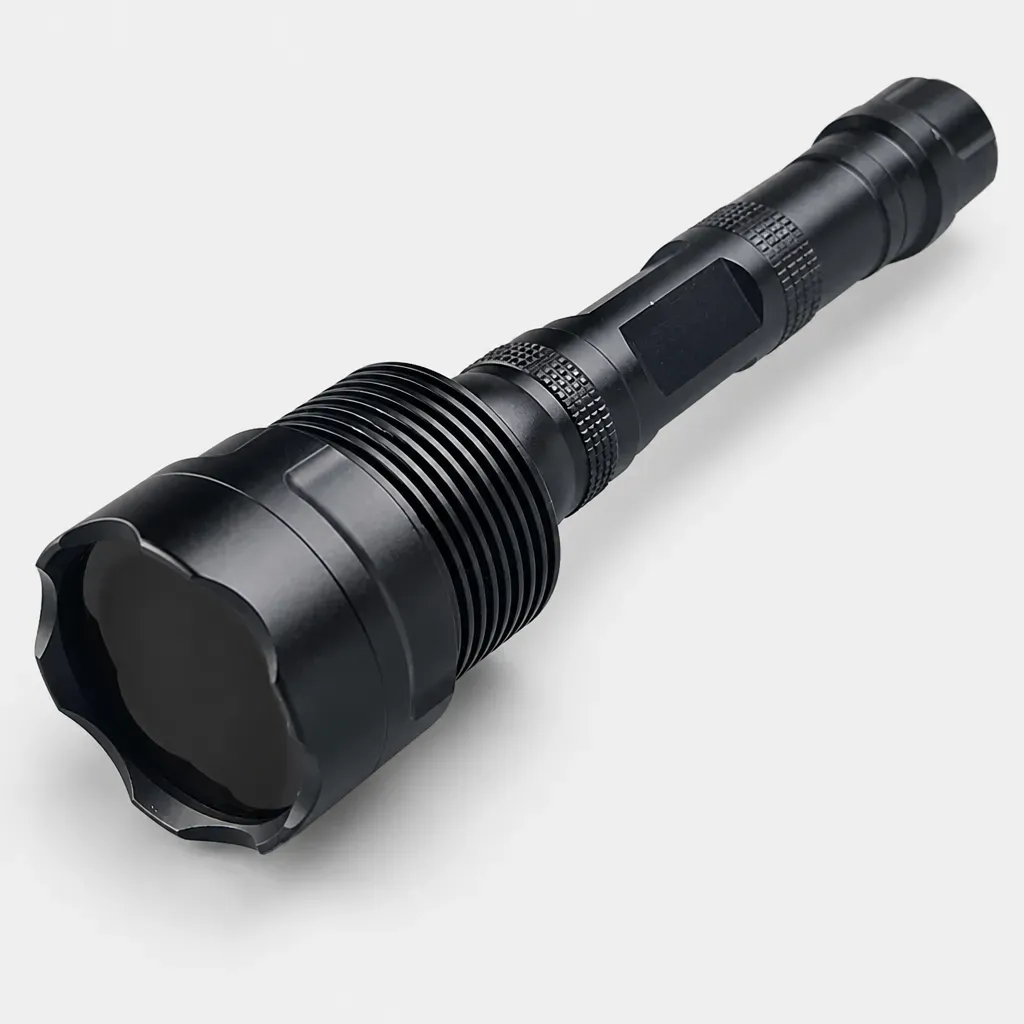
A professional UV inspection light is only useful if it shows what standard torches miss. In real inspection work, that means a precise wavelength, enough beam intensity to reach the target clearly, and minimal visible light contamination that can wash out fluorescence. Cheap UV torches often fail on all three points. They glow purple, throw visible spill everywhere, and make weak fluorescent responses harder to read.
That’s why demand in the UK has shifted towards filtered 365nm tools built for inspection rather than novelty use. Whether you’re checking trace residues, verifying fluorescent security features, inspecting industrial surfaces or working through site checks in low light, the difference between a general black light and a professional UV inspection light is practical, immediate and easy to see once you’ve used both.
Key Takeaways
- A professional UV inspection light should prioritise filtered 365nm output, not broad purple glow.
- Visible light spill reduces contrast and can hide faint fluorescence during inspection.
- Beam quality matters as much as wavelength, especially for distance checks and uneven surfaces.
- UK buyers should assess safety, build quality, battery reliability and suitability for their inspection environment.
- Filtered 365nm black light torches are often the best choice for accurate professional inspection because they deliver clearer fluorescence and more usable results.
Why professional UV inspection light matters in the UK
Across the UK, UV inspection is used in settings where clarity matters more than spectacle. Facilities teams use it to identify leaks and contamination traces. Security and cash-handling environments use it to inspect fluorescent markings and document features. Cleaning verification teams use it to reveal residues not visible under standard lighting. Engineers, detailers, tradespeople and specialist inspectors all rely on UV output for one reason: it reveals fluorescence that ordinary white light cannot.
In those settings, the tool itself becomes part of the inspection standard. If the beam is poorly filtered, too weak, or overwhelmed by visible violet light, the user may miss a faint response or misread surface detail. That isn’t just inconvenient. It slows workflow, increases repeat checks, and can undermine confidence in the result.
For British buyers, this matters in workplaces that value process consistency and traceable equipment choices. A team purchasing decision is rarely based on novelty. It’s based on whether a torch performs reliably on shift, travels well between sites, and gives repeatable visual results in real UK working conditions, from dim stockrooms to outdoor service areas in poor weather.
What makes a UV light “professional” rather than basic
The phrase professional UV inspection light should mean more than a stronger torch. In practice, it refers to a UV tool designed to produce accurate inspection conditions rather than a dramatic purple effect.
Filtered 365nm output
For many inspection tasks, 365nm is the preferred wavelength because it can trigger fluorescence effectively while preserving better contrast than many lower-cost alternatives. A filtered 365nm torch reduces unwanted visible light, making the fluorescent response stand out more clearly. That’s central to the UVBea Black product narrative: a 365nm Black Light Torch for Accurate Professional Inspection with filtered 365nm UV and long-range beam power for clearer fluorescence and less visible spill.
Reduced visible spill
Visible spill is one of the biggest differences between hobby-grade and inspection-grade UV tools. When a torch emits too much purple visible light, the target area can appear bright without actually revealing fluorescent detail properly. A professional unit aims to keep the scene darker and the fluorescence sharper.
Consistent beam power
Inspections rarely happen with the torch held at the perfect distance from a flat, clean surface. You may be working across a floor edge, inside a vehicle interior, against textured materials or from an arm’s-length position in a service environment. A long-range beam with consistent intensity helps you inspect more confidently without having to reposition constantly.
Build quality for working use
A professional tool also needs to survive routine use. That means a solid housing, dependable switchgear, practical charging or battery performance, and enough robustness for transport in a pocket, kit bag or van. Inspection tools often live alongside other gear, so durability is not an afterthought.
Why 365nm is the preferred wavelength for serious inspection
When people compare UV torches, they often focus on brightness alone. That’s misleading. In inspection work, wavelength and filtering matter just as much as raw output.
Many low-cost black lights use LEDs around 395nm. These can produce a strong visible violet glow, but they are often less refined for inspection because the visible component is more distracting. By contrast, a filtered 365nm light is commonly chosen where users need clearer fluorescent contrast. That clearer contrast helps when examining subtle traces, coatings, residues and markings that can disappear into background glare under cheaper lights.
From hands-on experience across inspection categories, the improvement is usually most obvious when looking for faint fluorescence. Under a poorly filtered light, the surface may just look purple. Under a filtered 365nm beam, the unwanted wash drops back and the fluorescent material becomes more distinct. That is the reason professionals frequently move up from entry-level UV torches once they start relying on the results rather than using UV occasionally.
How visible spill affects inspection accuracy
Visible spill sounds like a minor specification detail, yet it has a direct effect on what you can actually see. In a darkened area, excess violet light fills the field of view and lowers contrast. Faint fluorescent signals can be masked, especially on reflective, patterned or uneven surfaces.
That matters in practical UK use cases. A facilities manager checking trace residues in a washroom, a technician inspecting a service panel, or a retailer verifying fluorescent security features needs the target response to stand out quickly. Too much visible spill forces the eye to work harder and can increase uncertainty, especially over long sessions.
Filtered 365nm designs are popular because they tackle this exact problem. The beam is shaped for inspection rather than spectacle, so fluorescence appears cleaner and easier to isolate. In day-to-day use, that can mean faster scans, fewer missed details and less fatigue during repeated checks.
Where a professional UV inspection light is used in the UK
The British market for UV inspection tools is broad. While each application has its own technical needs, the reason for choosing a professional-grade torch remains consistent: users need trustworthy visual evidence under UV.
Facilities, cleaning and hygiene verification
Cleaning teams and supervisors may use UV light to reveal residues on surfaces, fixtures and touchpoints that are difficult to assess under standard room lighting alone. In environments where cleaning standards are closely monitored, a clearer UV response supports quicker verification. This can be relevant in healthcare-adjacent spaces, contract cleaning, hospitality and shared public facilities.
In the NHS and wider healthcare estate, cleanliness standards are taken seriously because environmental hygiene affects patient safety. While a UV torch is not a replacement for approved infection prevention protocols, it can serve as a useful inspection aid in training, spot-checking and visual verification workflows where fluorescent materials are intentionally used.
Security feature and document checking
UV-reactive features appear on many items used in British commerce and administration, from security markings to banknotes and selected printed materials. A professional UV inspection light can help users see fluorescent elements more clearly than a basic black light, especially where low spill improves contrast.
Automotive, detailing and workshop inspection
Workshops and detailers use UV inspection lights to spot fluorescent dyes, highlight contamination traces and inspect surfaces under controlled lighting. A longer-range beam is useful when checking larger panels or areas that are awkward to access directly.
Industrial and maintenance settings
Maintenance teams may use UV light in inspection routines involving trace fluids, marked components or specialist materials. Reliability matters here because the torch may be part of a toolkit used across indoor and outdoor environments, often under time pressure.
Forensic-style and specialist visual checks
Some sectors use UV tools for evidential or trace-oriented visual inspection. In those cases, equipment choice should be careful, documented and suited to the task. A professional UV inspection light supports the observation process, but users should always follow their sector’s procedures, handling rules and evidential standards.
What to look for when buying a professional UV inspection light in the UK
British buyers comparing products should move past generic listings and assess whether a torch is truly designed for inspection. These are the criteria that matter most.
1. True inspection-focused wavelength
Look for a filtered 365nm specification presented clearly and consistently. A listing that leans on “UV”, “black light” and “bright purple glow” without explaining wavelength or filtering may be aimed more at casual use than professional inspection.
2. Optical filtering
A filter helps suppress visible light spill. That usually translates into better contrast and cleaner fluorescent visibility. For many professional users, this feature is not optional.
3. Beam throw and usable range
A long-range beam is helpful when checking walls, ceilings, floors, vehicle panels or stock areas where you can’t keep the torch close to the target. Power should be usable, not just headline output.
4. Housing strength and thermal control
Higher-performing torches generate heat. A well-built body supports stable operation and better handling. Aluminium housings are common because they offer a practical mix of durability and heat management.
5. Battery platform and run time
For site use, battery reliability matters. Check charging method, replacement convenience and realistic run time. A professional user needs predictable operation across a shift or a callout, not a torch that fades when the job is half done.
6. Seller credibility and product clarity
Buy from a retailer that explains what the torch is for, states specifications in plain language, and doesn’t blur the line between professional inspection equipment and party-style black lights. Clear guidance is a trust signal.
How a filtered 365nm black light torch improves inspection results
UVBea Black positions its core product around a simple but important benefit: accurate professional inspection. That accuracy comes from the combination of filtered 365nm UV and long-range beam power.
In use, that means less time fighting visible purple haze and more time reading the actual fluorescent response. Faint traces are easier to separate from the background. Surface detail stays more usable. Working distance becomes less restrictive. For people who inspect regularly, these improvements are not marginal. They change how efficiently the job can be done.
This is especially relevant when the environment is less than ideal. British workplaces are full of mixed lighting, reflective materials, cramped angles and uneven surfaces. A torch that performs only in a perfectly dark, close-up demonstration is not enough. A professional UV inspection light should still give a clear reading when conditions are ordinary rather than staged.
UK safety and compliance considerations
Any ultraviolet light source should be used responsibly. Buyers in the UK should treat a professional UV inspection light as technical equipment, not a toy. Direct eye exposure should be avoided, and users should follow the manufacturer’s guidance on safe handling, operating distance and any recommended protective eyewear for specific inspection tasks.
Workplaces also need to think about risk assessment. Under the Health and Safety at Work etc. Act 1974, employers have a duty to manage workplace risks sensibly. If UV equipment forms part of a routine process, that process should be documented, and staff should be trained in correct use.
Where non-ionising radiation risks are relevant in the workplace, the Health and Safety Executive provides guidance on managing exposure. Professional buyers should align torch use with their internal safety procedures and the specific environment involved.
It is also important not to overclaim what a UV torch can do. A professional UV inspection light helps reveal fluorescent responses. It does not diagnose contamination, certify hygiene, authenticate items on its own, or replace approved testing procedures. Trustworthy product content should make those boundaries clear.
Data point: why better inspection tools matter
Counterfeit notes remain a live issue for UK businesses handling cash. According to the Bank of England, fewer than 1 in 30,000 banknotes in circulation are counterfeit, yet around 116,000 counterfeit Bank of England notes with a face value of £2.6 million were removed from circulation in 2023.1 Even with a relatively low rate, the impact on individual retailers and frontline staff can be costly.
That figure matters because it shows how inspection quality still has real-world value. When fluorescent security features form part of a checking process, clearer UV visibility supports better judgement. The same principle applies outside cash handling: a tool that reveals faint detail more clearly can reduce missed findings and repeated checks.
Source: Bank of England annual counterfeit currency statistics, 2023.
Common mistakes buyers make when choosing a professional UV inspection light
- Buying on brightness alone. A torch can look bright and still perform poorly for inspection if visible spill dominates the beam.
- Choosing 395nm for precision work. Lower-cost 395nm lights can be useful in some casual applications, but many professionals prefer filtered 365nm where clear fluorescence is the priority.
- Ignoring beam shape and throw. Close-range demos can hide weak real-world performance at practical working distances.
- Overlooking battery practicality. Inspection tools need dependable run time and sensible charging arrangements.
- Assuming UV alone proves authenticity or cleanliness. A torch supports inspection. It does not replace process, training or sector-specific verification methods.
How professionals can evaluate a UV inspection light before buying
If you’re comparing options for regular use, assess them against the job rather than the listing headline. A sensible evaluation process includes:
- Checking whether the wavelength is clearly stated as filtered 365nm.
- Looking for evidence of reduced visible spill rather than exaggerated purple output.
- Assessing whether the beam is suitable for your working distance.
- Reviewing build quality, battery details and handling practicality.
- Confirming the seller understands inspection applications and explains product limits honestly.
That last point matters for trust. In ecommerce, product authority comes from specificity. Strong retailers explain what the torch does well, where it is most useful, and what kind of user will benefit from it most.
Why UK buyers are moving away from generic black lights
Generic black lights still have a place in novelty and occasional-use markets, but professional buyers usually need more. Once inspections affect workflow, documentation, staff time or loss prevention, the shortcomings become obvious. Poor contrast leads to uncertainty. Weak beam control slows scanning. Short battery life undermines field use.
That’s why filtered 365nm torches are increasingly favoured by people who need repeatable performance. In practical terms, they are built around what the eye needs to see during inspection, not what looks dramatic in a product photo.
For UK businesses, the calculation is straightforward. A more suitable inspection tool can save time, reduce doubt and support more consistent checking standards. That is often worth more than the small upfront saving on a lower-spec torch.
Choosing UVBea Black for accurate professional inspection
UVBea Black’s main proposition is tightly aligned with what professional buyers actually need: a 365nm Black Light Torch for Accurate Professional Inspection. The emphasis on filtered 365nm UV and long-range beam power speaks directly to two of the most important performance factors in serious UV work: clarity of fluorescence and usable beam reach.
That makes the product particularly relevant for buyers who have already outgrown low-cost purple-glow torches and want a tool better suited to real inspection tasks. If your priority is clearer fluorescence with less visible spill, that specification is meaningful rather than cosmetic.
In ecommerce terms, this is where trust is built. Buyers don’t need inflated claims. They need a torch that matches the demands of professional checking in the field, workshop, facility or commercial environment. A filtered 365nm inspection torch is a credible answer to that need.
Call to action: explore the UVBea Black inspection torch
If you need a professional UV inspection light built for clearer fluorescence and more accurate results, UVBea Black’s filtered 365nm torch is the logical next step. It is designed for professional inspection use where reduced visible spill and long-range beam performance matter.
View the UVBea Black product range and see the 365nm inspection torch.
Frequently Asked Questions
What is the best wavelength for a professional UV inspection light?
For many inspection tasks, filtered 365nm is widely preferred because it offers clearer fluorescence with less distracting visible spill than many cheaper alternatives. The best choice still depends on the application, but 365nm is often the benchmark for professional inspection use.
Is a 365nm UV torch better than a 395nm black light?
For professional inspection, often yes. A 395nm light usually produces more visible violet output, which can reduce contrast and make faint fluorescence harder to interpret. A filtered 365nm torch is generally better when accuracy and clarity matter.
Can a professional UV inspection light be used for banknotes, cleaning checks and workshop inspection?
Yes, a professional UV inspection light can support those tasks where fluorescent responses are relevant. It should still be used as part of a proper process rather than as the only method of verification, especially in regulated or high-risk settings.
Are UV inspection torches safe to use?
They are safe when used correctly and according to manufacturer guidance. Users should avoid shining UV light directly into eyes, follow workplace safety procedures, and treat the torch as professional equipment rather than a novelty product.
Ready to try UVBea Black?
Shop Now — £83.99